
When companies evaluate packaging automation, the focus usually starts with equipment. What machine is needed, what is the cost, and how quickly can it be installed are often the first questions asked.
Those are important. But they only tell part of the story.
End-of-line automation performance is not driven by equipment alone. It is shaped by how well that equipment works with the materials, processes, and operational realities around it. Without that alignment, even the best system can fall short of expectations.
Why Equipment Alone Falls Short in Automation
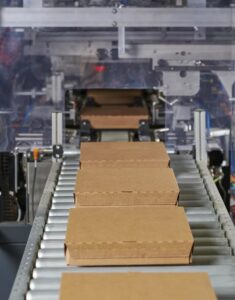
Every automated packaging line depends on the materials it runs. Corrugated cases, stretch film, labels, and protective packaging all play a role in system performance.
When those materials are not designed or selected for automation, issues tend to surface quickly:
- Inconsistent case quality that impacts machine runnability
- Film that does not perform at required speeds or tensions
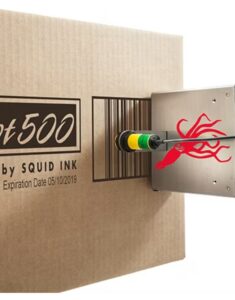
- Labeling challenges that disrupt flow or accuracy
- Increased downtime tied to jams, rework, or adjustments
These are not equipment failures. They are system misalignments.
In high-volume environments like manufacturing, food production, and distribution, even small inefficiencies at the material level can create measurable impacts on throughput, uptime, and cost per case.
Building a More Integrated Packaging System
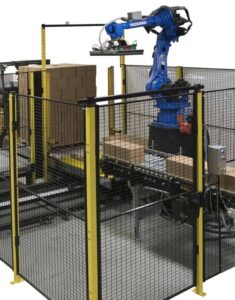
Automation works best when it is approached as a complete packaging system, not a standalone machine purchase.
That means aligning three critical elements:
- Equipment selected for the application and throughput requirements
- Materials engineered for consistency and machine compatibility
- Ongoing support to maintain performance over time
When these elements are designed to work together, operations see a different level of performance. Cases run more consistently. Films perform as expected. Labeling integrates smoothly into the line.
Instead of constant adjustments, the system runs with greater stability and predictability.
Reducing Complexity Across the Operation
One of the biggest hidden challenges in packaging automation is managing multiple vendors across equipment, materials, and service.
This often leads to:
- Slower troubleshooting when issues arise
- Confusion around ownership and accountability
- Missed opportunities to optimize the full system
A more integrated approach simplifies that environment.
With aligned equipment, materials, and service, operations can focus on what actually matters:
- Uptime across the line
- Throughput and output consistency
- Total cost of packaging, not just equipment cost
This shift from managing components to managing outcomes is where automation begins to deliver its full value.
Automation is most effective when it is treated as an ecosystem rather than a single investment. When materials are designed to run with the equipment and the system is supported as a whole, performance becomes more consistent, issues are easier to solve, and operations are better positioned to scale.