
End-of-line packaging is where production becomes shipment and where small inefficiencies can turn into bigger operational issues.
Many facilities still rely on manual processes like case sealing, palletizing, and packing. While these methods can work, they often introduce variability that impacts performance, cost, and scalability over time.
Where Manual Processes Start to Break Down
Manual packaging creates inconsistency in a part of the operation that depends on repeatability.
Across shifts and teams, differences begin to show in how products are packed, sealed, and palletized. That variability can lead to downstream issues that extend beyond the packaging line.
Common challenges include:
- Inconsistent case sealing and packing quality
- Unstable or uneven pallet loads
- Increased product damage during transit
- Rework that slows down overall operations
Over time, these issues affect more than efficiency. They influence load quality, transportation performance, and the customer experience.
The Throughput and Labor Tradeoff
Manual end-of-line packaging can also limit how operations scale.
As volume increases, the default response is often to add labor. But more labor does not always solve the problem. It can introduce new constraints and make performance harder to manage.
Operations often see:
- Bottlenecks that restrict throughput
- Higher labor costs tied to volume growth
- Increased training and turnover challenges
- Difficulty maintaining consistent output across shifts
Even when upstream production improves, the end-of-line can struggle to keep pace, becoming the limiting factor in overall performance.
Moving Toward More Consistent Performance
Improving end-of-line packaging is less about replacing manual work and more about creating consistency.
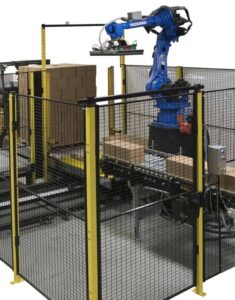
A more standardized approach helps stabilize performance and support growth without adding complexity. When processes are aligned and repeatable, packing, sealing, and palletizing become more consistent across shifts, reducing variability that leads to damage and rework. Throughput increases without requiring proportional labor, and operations gain a more predictable output that is easier to manage and scale.
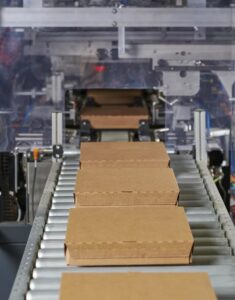
End-of-line packaging performs best when it is treated as a connected system rather than a series of manual tasks. When equipment, materials, and workflow are aligned, operations can reduce variability, improve control, and build a more reliable foundation for growth.